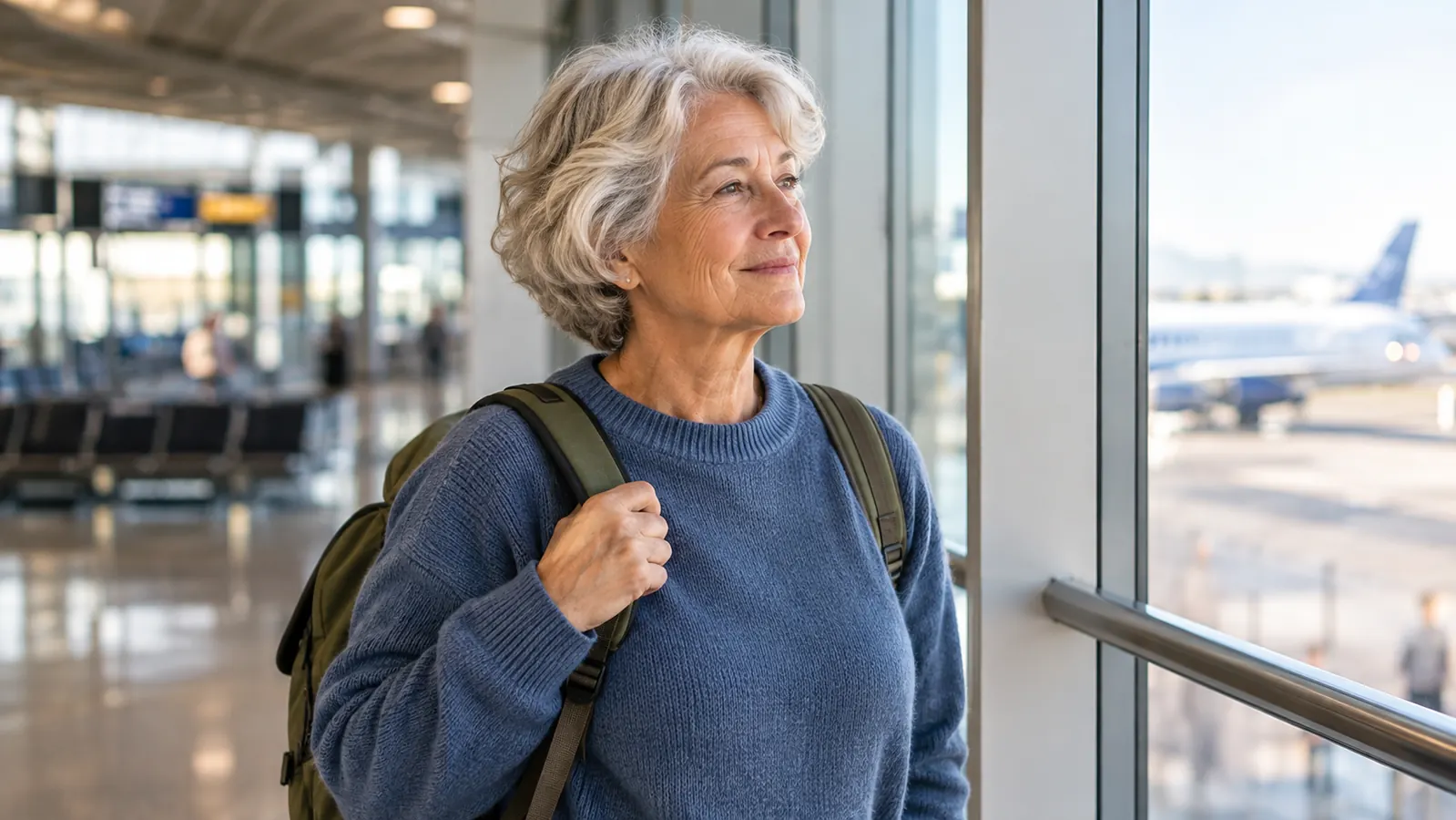
For most of my working life, my purse was my carry-on. I would fold a paperback into it, tuck my ticket in the side pocket, and call it packing. That worked fine when a flight meant an hour down to Denver. It stopped working the year I started flying with medications, a laptop, and a change of clothes, and it really stopped working the afternoon I stood in the aisle of a plane out of Billings with a handbag strap cutting into my right shoulder while people waited behind me. My shoulder has not been right since an old injury, and that day I decided I was finished with it. What replaced it was a Taygeer underseat backpack, and I have hauled it through more airports, train platforms, and hotel hallways than I can count. Here is what actually changed.
I am not going to tell you a backpack is stylish the way a good handbag is. It is not. I am going to tell you what it does on the day you are walking to gate B12 with fifteen minutes to spare, and why that matters more than how it looks in a photograph.
The bag that got my shoulder out of the aisle
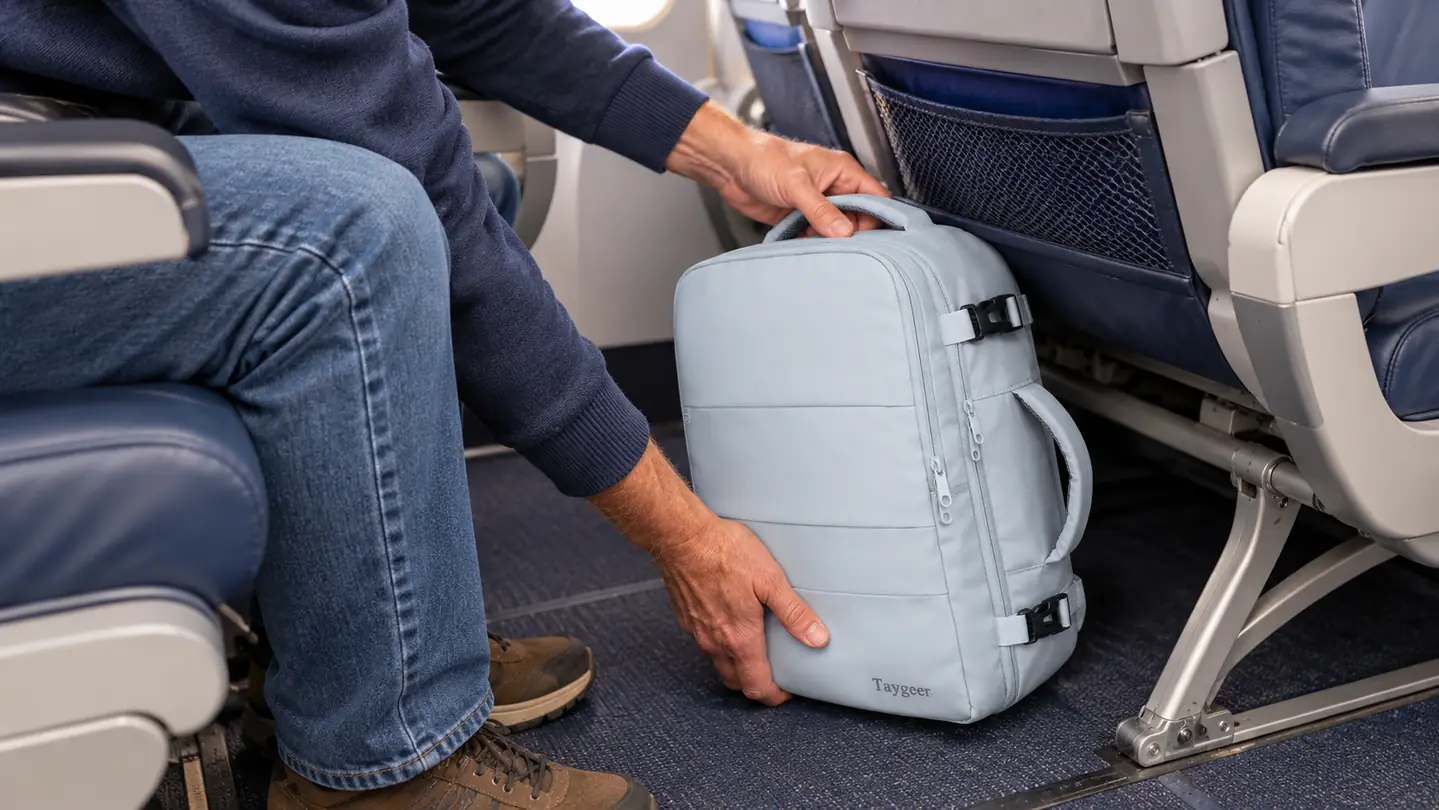
Taygeer's carry-on backpack measures 16.8 by 11 by 7 inches and weighs 1.74 pounds empty. It is sized to slide under the seat in front of you, and it is the last one I went shopping for.
Amazon Check Today's Price on Amazon →It Fits Under the Seat Instead of Fighting for Overhead Space
The measurements are 16.8 inches tall, 11 inches wide, and 7 inches deep. I wrote that down on an index card the first month because I did not believe it. On a full flight out of Billings last spring, the overhead bins closed before half the cabin boarded, and the gate agent started tagging roller bags. I slid this one under the seat in front of me with room to spare and put my feet on either side of it. Nobody asked me to check it. That one thing has saved me more aggravation than any other feature on this list.
It Replaces the Purse and the Tote at the Same Time
My old routine was a purse on my shoulder and a tote in my hand, which meant two things to keep track of, two things to set down, and one thing to forget on a restaurant chair. The Taygeer has three main compartments, so the purse contents go up front, the clothes go in the middle, and the things I do not want touching the clothes go where they belong. One bag, one set of straps, one thing to remember when I stand up to leave. That is the whole argument, and it is enough.
Both Hands Stay Free on Stairs and Jet Bridges
You do not think about this until you are on a jet bridge with a coffee in one hand and a boarding pass in the other. Or on the narrow stairs of an Amtrak sleeper car, where you want one hand on the rail and one hand on your bag. A purse hangs off a shoulder and swings into your hip. Ron carries the heavier bag on our longer trips, but I am not going to hand him my coffee. With the backpack on my back, both hands belong to me again, and I take the stairs at my own pace.
The Weight Spreads Across Both Shoulders
This is the reason I switched, and I will be plain about it. I have a stiff right shoulder from an old injury, and by the end of a travel day a loaded purse had it aching up into my neck. The straps on this bag are adjustable, so I set them short enough to keep the load high on my back and off that one side. It is not a cure for anything. It is just a bag that lets me carry my own things without paying for it the next morning.
A Laptop Rides in Its Own Slot
The bag is built to hold a device up to 15.6 inches, and my laptop goes in that sleeve and stays there. Before this, I carried the machine in a separate case and spent every security line repacking myself like a folding table. Now I open the bag, lift the laptop into a bin, and put it back in the same place on the other side. One less decision at six in the morning, when I am not at my best anyway.

The Shoe Bag Keeps the Rest of the Load Clean
The bag comes with a bonus shoe bag, which sounds like a small thing until you have put a pair of walking shoes back in beside your clean clothes after a day at a museum. My shoes go in the shoe bag. There is also a wet pocket, which is where the damp washcloth goes, and where the hotel shampoo went the time the cap came loose. If you have ever unpacked onto a bed and found a ring of something on a folded shirt, you understand why this sits at number six instead of number nine.
It Opens Flat at Security
The zipper runs 180 degrees, so the bag lies open like a book instead of getting gouged at from the top. I lay it flat in the bin, everything visible, and I am through without the second look that used to follow my overstuffed handbag. For anyone who has stood in that line while a stranger's hands went through their things, this is worth more than all the pockets combined. It also means I can see what I packed when I repack it, which cuts down on the small items that go missing.
The Small Pockets Hold What You Reach For Most
There is a utility pocket up front, and that is where my glasses case, my medications, and a pen live. Not buried. Not at the bottom of a tote where I have to excavate past a sweater to find a pill bottle. When the drink cart comes around and I need to pay, or when the gate agent calls my row, I have what I need in a second. Standing up in the aisle to dig through a bag is a young woman's game, and I stopped playing it.
A Splash of Rain Does Not Ruin the Trip
The bag is water resistant and closes with a zipper, so the walk from the terminal to the rental car shuttle in a Montana drizzle does not soak through to the laptop. I would not stand in a downpour with it, and I have not needed to. But the difference between water resistant and a fabric handbag that drinks up a rain shower is the difference between an ordinary afternoon and a wet pile of clothes spread across a hotel room at nine at night.
It Weighs Under Two Pounds Empty
The bag itself is 0.79 kilograms, which is 1.74 pounds. That number matters more every year, because every ounce in the bag is an ounce I lift into a car trunk, up onto a train rack, or onto the bench in a hotel room. An empty bag that already weighs five pounds has spent five pounds of your allowance before you have packed a single thing. This one leaves almost all of it for what you actually need to bring.
Sixteen point eight inches tall, eleven wide, seven deep, and 1.74 pounds empty. That is the entire reason it slides under a seat instead of riding in the overhead.
What I'd Skip
It is a backpack, and it behaves like one. If you want a bag that stands up beside your chair in a restaurant, this one will slump against your leg. The straps also mean you cannot carry it on one forearm the way you carry a handbag into a nice dinner, and on the short trips where I want one small bag and nothing else, I still take a plain purse and leave this at home. I would not buy it expecting it to organize itself either. The compartments are there, but you still have to decide what goes where, and the first two trips I got that wrong.
And if you are packing for two weeks rather than a long weekend, this is not your bag. It is a personal item sized to go under a seat, and I would not pretend a carry-on backpack of this size will hold a fortnight of clothes for two people. Ron and I use it for three or four days each, plus the train trips where we are never far from the suitcase in the rack.
If your shoulder has been telling you something, listen to it
The Taygeer carry-on backpack is 16.8 by 11 by 7 inches, weighs 1.74 pounds empty, has adjustable straps, a padded sleeve for a laptop up to 15.6 inches, a shoe bag, and a wet pocket. Close to thirty thousand buyers have rated it 4.7 stars. It is the bag I stopped shopping after.
Amazon Check Today's Price on Amazon →