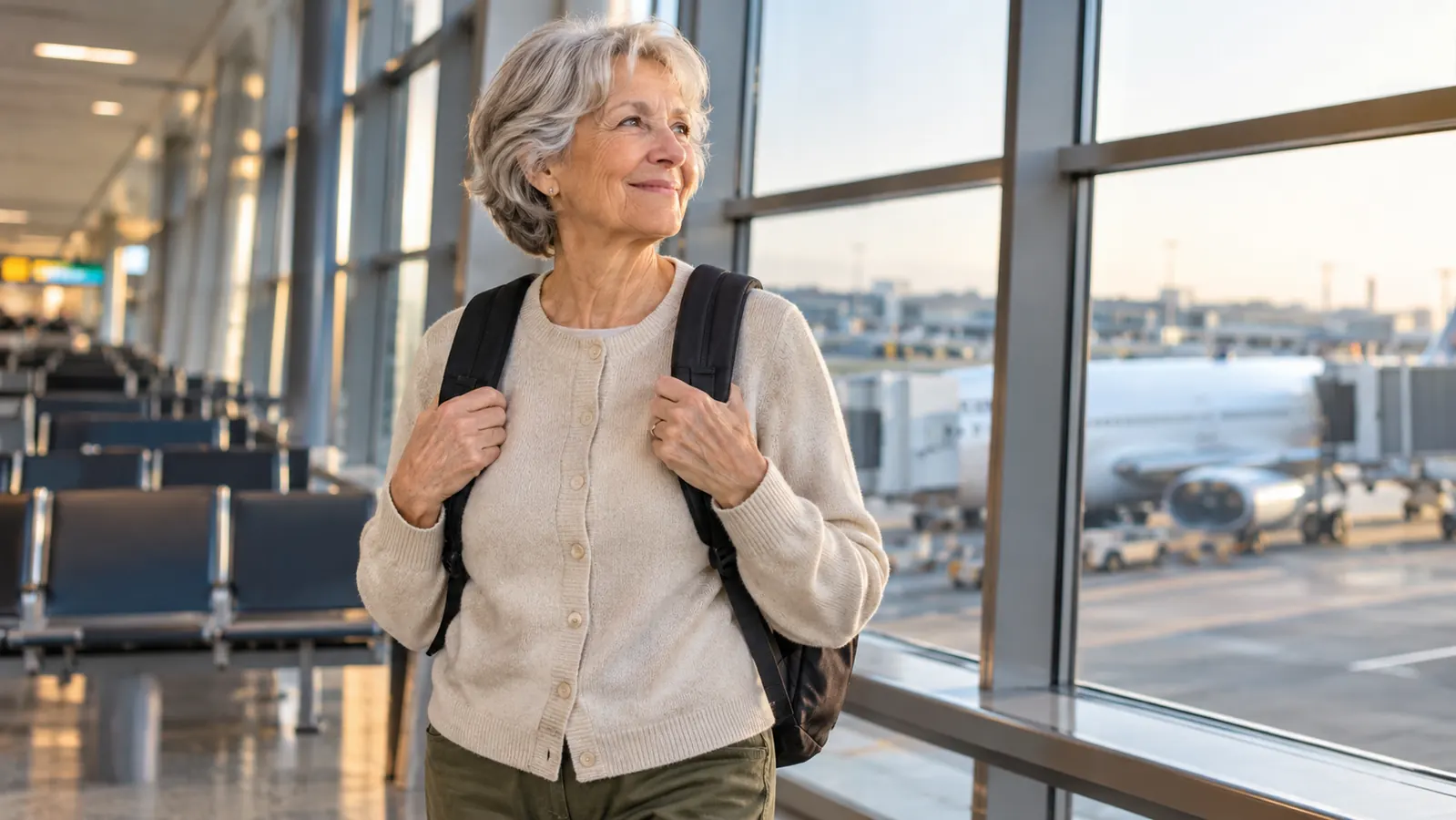
For twenty-nine years I carried a shoulder bag to work. School librarian in Billings, Montana, first bell to last, books and keys and a lunch on the right shoulder every single morning. I retired at sixty-two and that shoulder retired with a grudge.
Here is what nobody tells you about a tote. The weight is not the problem. The strap is. One strap means one shoulder carries the whole load while the other side of your neck pulls back all day to compensate. I have a stiff right shoulder from an old injury, so I was doing the worst possible thing for it, cheerfully, for three decades. I knew better. I kept going, because somewhere along the line I had decided that a backpack was for college students and hikers. Then I tried one on in a store in Billings, a Taygeer carry on backpack, and asked myself an honest question about my neck. The answer was that it felt fine. That was the whole argument, and it took about four seconds.
The trip that pushed me over was a spring flight out of Billings to see our daughter and her family in Denver. I had packed a tote that weighed more than my little carry on suitcase, and I stood in the security line shifting it from one shoulder to the other like a sack of feed. By the time I reached the gate my neck ached and I was short with a woman behind me who had done nothing at all. Ron looked over and said the thing he had been too polite to say for years. He said, Darlene, you are sixty-four. Buy the bag with two straps.
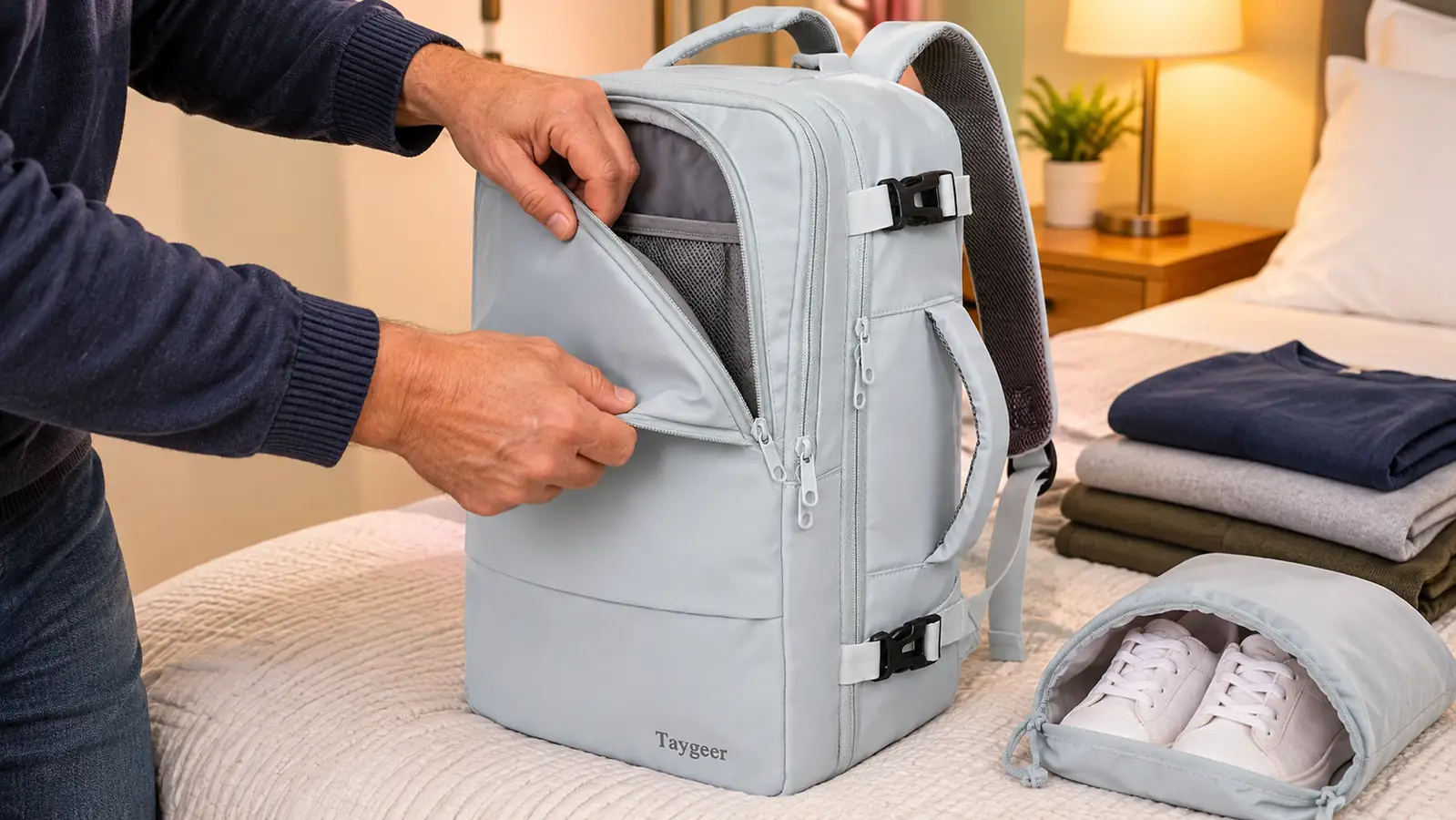
So I did. The Taygeer underseat backpack is 35 liters, 16.8 inches tall by 11 wide by 7 deep, and it weighs 0.79 kg, which is about a pound and three quarters, less than a hardcover novel. Two straps, weight split down the middle of my back, both hands free for a coffee and a boarding pass. I have not carried a shoulder bag on a trip since, and I have made five since then: two flights to Denver, two stretches on the Empire Builder, and a long weekend in Sheridan.
Two straps, weight split down the middle of my back, both hands free. I have not carried a shoulder bag on a trip since.
The bag that ended a thirty-year shoulder habit
The Taygeer carry on backpack is 16.8 by 11 by 7 inches and weighs 0.79 kg, and it slides under the seat in front of me. That is the whole pitch, and it is enough.
Amazon Check Today's Price on Amazon →Here is what changed in practice. At 16.8 inches tall and 11 wide, the Taygeer slides under the seat in front of me on a Denver flight with a little room to spare, so I am not fighting anyone for overhead space or standing in the aisle holding my breath while strangers rearrange their roller bags. The shoulder straps are adjustable, which matters more than I expected, because I am short in the torso and most backpacks put the padding in the wrong place on me. I tightened mine until the bag sat high and flat against my back, and the ache between my shoulder blades quit by the second trip.
The 180 degree zipper is the feature I would not have thought to want. It opens flat like a book, so at security I unzip, lay the bag down, and everything is visible at once instead of me pawing through a dark tube while the line sighs behind me. With the three main compartments spread open I have cleared a checkpoint in under a minute. The same flat opening helps at the other end. In a hotel room I set it on the luggage rack, open it wide, and I can see where my reading glasses went without unpacking half the bag onto the bed.

Two small things earn their keep. There is a bonus shoe bag, so my walking shoes ride separate from my blouses, and there is a wet pocket, which I used first for a damp washcloth and later for a travel shampoo that leaked. The bag is water resistant, not waterproof, and I would not test it in a Montana downpour, but it has shrugged off drizzle on a platform in Whitefish without soaking through to my sweater. It also takes a laptop up to 15.6 inches, though mine stays home and a paperback does not complain about the space.
What I notice most is not a feature. It is that I walk differently. With the tote I leaned. With the Taygeer on both shoulders I stand up straight, and my hands are free for a railing on the stairs at the station or a ticket I need to find in a hurry. Ron still rolls the heavier suitcase, because that was the deal and neither of us pretends otherwise. He is a retired surveyor and he has packed the same way since 1985, so I do not argue with him about it anymore. But my own bag stopped being something I handed off, and that has changed how much I enjoy getting there.
What I'd Tell You If We Were Sitting at My Kitchen Table
I would tell you to stop treating a backpack as a young person's bag. That was my own foolishness and it cost me a decade of a sore shoulder. The Taygeer is a plain, well-made, light bag with two straps and a sensible opening, and it does not look like camping gear. I have carried it into our daughter's church in Denver, onto Amtrak, and into a diner in Sheridan, and nobody has looked at me twice.
I would also tell you the honest part. It is not a suitcase. If you pack the way Ron packs, one pair of shoes and one sweater, you will be fine for a week. If you pack the way I did in my library days, three books and a knitting project, you will have to choose. The zippers are good but they are not the heavy hardware of a bag that costs several times as much, so do not overstuff it and then yank. Treat it kindly and it will outlast the trips you have already planned. Look at the current price before you decide, because it moves, and read the reviews from women our age rather than the ones from twenty-year-olds with no shoulder trouble. Then buy the bag with two straps and stop arguing with your own neck.
If your shoulder has been telling you this for years, listen to it
16.8 by 11 by 7 inches, 0.79 kg, adjustable straps, and a flat 180 degree opening for the security line. The Taygeer carry on backpack, from a woman who wishes she had switched a decade sooner.
Amazon Check Today's Price on Amazon →